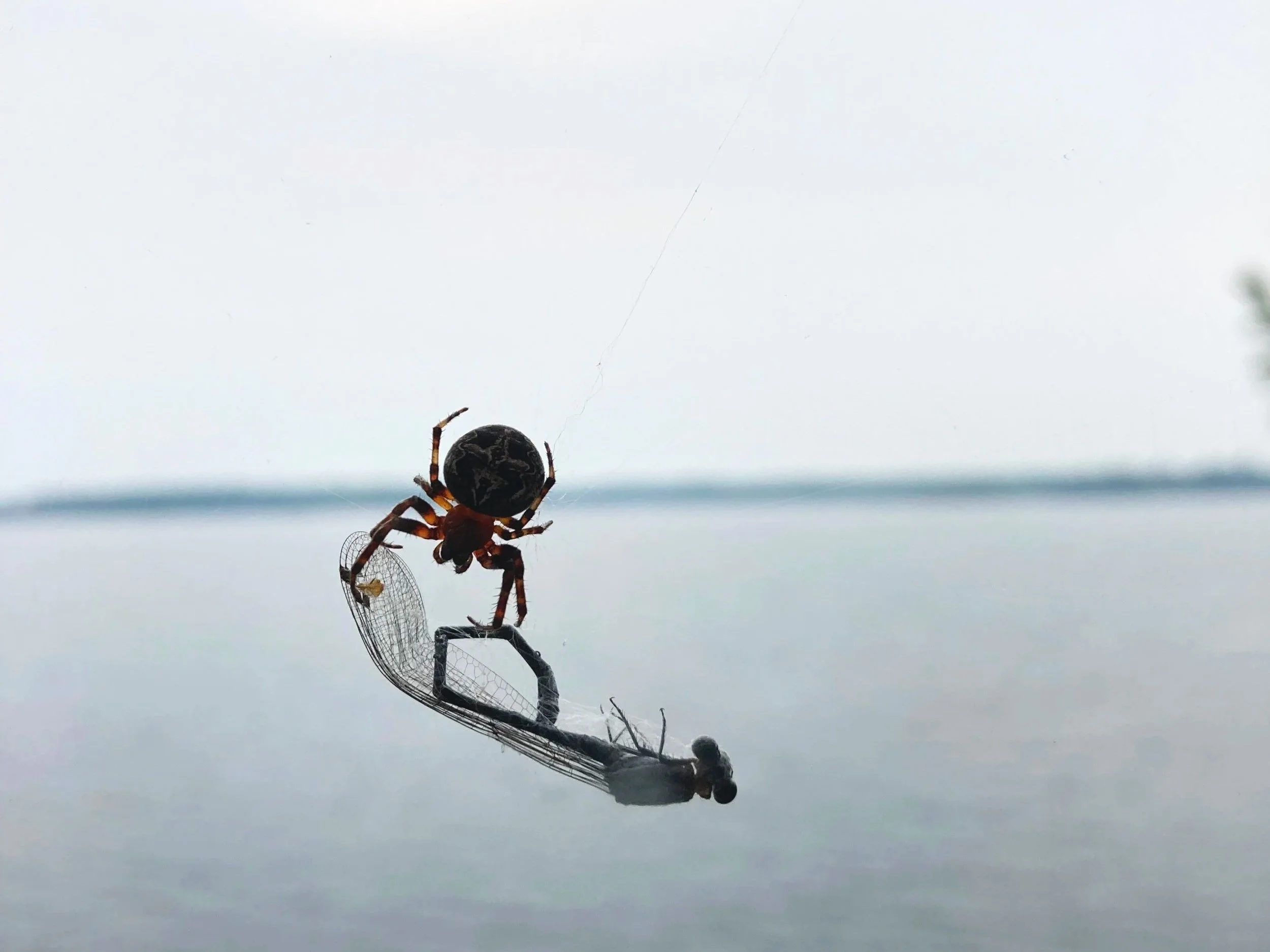
Finding justice even for the spiders
Last summer, I spent two weeks at a cottage on Georgian Bay with my mother's best friend, Penny, who was 88.
One evening over dinner, Penny casually mentioned that a photographer was coming the following week to take pictures of her naked. I wasn't the least bit surprised.
Penny has spent much of her life challenging injustice, particularly for women. She became an Anglican minister and once caused an entire congregation to gasp when she deliberately replaced the word "men" with "people" while reading scripture.
Now, at 88, she was preparing to challenge ageism by posing nude for a photography project.
Six months before my visit, Penny attended my Personal Statement of Purpose Workshop, where she clarified her purpose:
"To learn so we find justice."
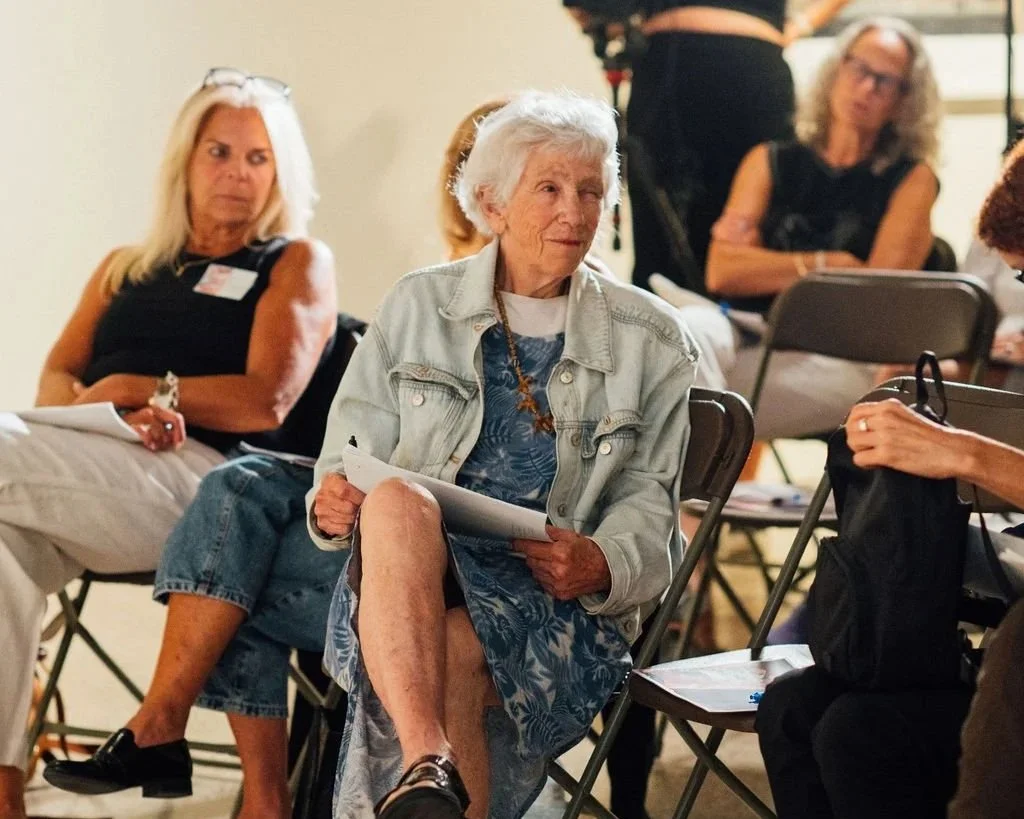
Knowing Penny for most of my life, I wasn't surprised. It was so clearly who she was.
But something she said during my time with her did surprise me. "I don't know, Cath. I can't find my purpose at the retirement home."
Here was a woman who had spent decades advocating for justice, put her purpose into words, yet struggled to recognize she was still living it.
Had Penny lost her purpose? Or had the circumstances in which she expressed it simply changed?
Every evening, we sat in front of a large picture window overlooking Georgian Bay. Around 8:30, dozens of spiders would appear, scurrying up and down their webs.
Whenever I called a spider "he," Penny would quietly correct me. "She. Cath, you don't know. It might be a she."
There she was, standing up for justice. Even for the spiders.
It was such a small moment, but it revealed something profound.
Penny wasn't consciously deciding to advocate for justice. It was simply her natural response to something she felt deeply.
Throughout our two weeks together, I heard stories of her standing up for women, vulnerable communities, and now older people. I also watched her advocate for her own independence.
Early in our visit, we agreed that Penny would tell me when she needed help, rather than have me assume what she could or couldn't do. She knew her limitations and wasn't afraid to ask. My responsibility was to respect her ability to decide for herself.
Even in these everyday moments, Penny was still seeking justice, this time for herself because what we seek for others is what we seek more for ourselves.
I can't help but think those two weeks were a gift, an opportunity to live my own purpose, "To inspirit so we maintain our authenticity," by helping Penny recognize the thread of justice that had run through her entire life and continued to guide her.
Toward the end of our visit, after beautiful conversations about her life, Penny caught herself using the word "justice" yet again.
"Cath, there's that word again. Justice." That was my sign that something might be beginning to shift.
Penny hadn't lost her purpose. She had simply lost sight of the ways she was still living it.
And perhaps that's one of the greatest gifts of clarifying our purpose. It gives us the words to recognize the meaningful difference we've been making all along, and reminds us that even when our circumstances change, the value we bring to the world doesn't change with them.
Penny reminded me that we don't retire from purpose. At 88, she was still learning, still questioning her assumptions, and still finding justice.
Even for the spiders.
Purpose is just a word until you make it personal.